Tuesday, April 3, 2012

Magicians:


Welcome to my nightmare: someone decided to merge C.S. Lewis, Harry Potter and a Porno. Frankly, I'm not sure if I should applaud, or tie a noose, throw it over a rafter and kick the chair out from under it.

This book came across my desk highly recommended by several friends and while the rhetoric was excellent, the grammar wonderful, and the scenery detailed, the plot line simply falls apart. Not only does it fall apart but it pulls from almost every Chronicle of Narnia book ever written including the frequently ignored Magician's Nephew.

We enter the life of a young boy named Quentin, the third weel, the genius in general the socially awkward odd one out. Gag me with a spoon, but I'm pretty sure thats how Harry Potter starts. Awkward kid with glasses who is constantly placed in socially awkward moments. Glancing over the parallel's, he is on his way to meet with someone to discuss his future attending Princeton college, things go catastrophically haywire, and he finds himself at a school for the magically gifted called "Brakebills" where he is examined poked and prodded until finally he is pushed into releasing some major spell-casting without intending too. Which depressingly the author never once decides to really describe magic at that level ever again until the very end of the book and even that scene lasts marginally longer than sex with the over-priced hooker you lost your virginity too.


SPOILER ALERT

Now let me begin this with the disclaimer that any author who has the balls to even begin to throw time travel into one of their books deserve's a pat on the back. In this case though I honestly have to say what the ever-living hell where you planning on doing with this one.

First of all, you have a character who is capable of time travel, who can go back in time and alter the past through the use of a silver watch given to her by some magic dwarves.

Second of all, the entire miserable excuse for a plot revolves around the fate of Martin Chatwin who has through some level of delusion decided that he is a god and kills of the other god's of Fillory assuming power and control of one of the apparently thousands of multi-verses.

Lastly, the kicker the character in possession of the watch who has gone back in time and tried "all of the possible outcomes" something the book claims is in an of itself impossible by its own rules, claims there is no other way for everything that has happened to Quentin and his friends to not happen and then destroy's the watch.

Conclusion: Essentially all powerful mages who have the ability to manipulate space time, and bring small animals to life were found to be incapable of going back in time, and killing one particular boy who broke the rules BEFORE he turned into the big bad wolf. Not only that, but the actual importance of the lives of these so called magicians is zero. The battle they fought was pointless, there world wasn't in danger their lives weren't in danger. No, they stuck their head inside of a giant death trap and slammed the thing shut on themeselves repeatedly until some of them DIED.

My overall rating for this book, is a two out of five, and the second star in that rating is a pity star thrown out there because the author decided to cause two of his characters to have animal sex.

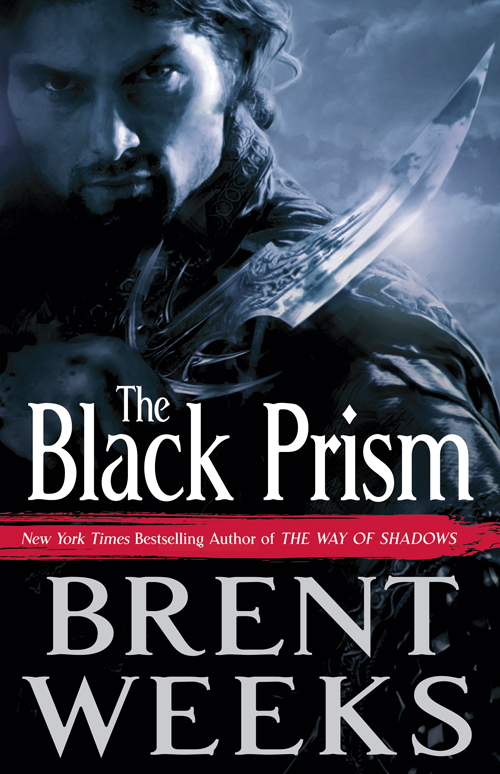
The Black Prism:


"The Black Prism" written by New York Times Bestselling Author, Brent Weeks is simply not up to par with his previous works The Night Angel Trilogy.

Don't get me wrong, the book is still well written, the characters are deep, if not at times tragically cliche. However it lacks the luster, the explosive detail the "colorful" descriptors that made us want to sink our teeth into the life of Kylar Stern.

Now get ready because here's the major kicker about this book, its sorta like a "pick your own adventure" book. Somewhere around the middle of The Night Angel series Mr. Weeks decided that he was going to begin telling not just one story but several and I'm pretty sure he got the idea from George R Martin.

The story begins following the un-heroic story of a young bastard, who through a series of unfortunate events discovers he is the son of the most powerful "mage" in the land "The Prism". However, thats not the only story we follow, no our author leads us along getting us just to the point where the character starts get interesting developing our short fat, protagonist in such a way that the reader begins to actually feel sorry for him. Then just when you begin to actually develop a sordid level of affection for him, its up up and away folks were off in the head of the most powerful mage in the world, having terminology thrown at us that we have to either pick up and figure out what it means or stutter in confusion.

Quite honestly, while I appreciate the depth he tries to place in each of his characters, and how he tries to really flesh out each individual character. Its get's old really fast, not only that but it turns a book that could have been four hundred pages into a seven hundred page monstrosity that some casual reader then might not enjoy. I understand that you want us to have all these different angles and all of these different characters to empathize with, but I'm just not buying it. Pick one or two characters, and tell the story.

All in all, I give this book a 3.5 out of 5. It was an original concept, with good intentions and a great plot once you get involved in the story. However, for the amount of actual story told, and plot progression that was made the book was simply too long. The other things this title was sorely lacking was a glossary. It would have been nice to have a section at the back of the book that explained all of the words he created and better explained the magic system.

Tuesday, December 20, 2011

Christianity:

Christianity, one of the world religions born out of the middle east and virally spread across the globe is one of the most controversial issues in the world today. The origin of the controversy? Human nature. Not in the conventional sense though, the sense that people are naturally cruel, self serving base creatures. Rather, human nature in the sense that when challenged with something that is impossible to explain the human brain seeks out the first rational seeming explanation. For example in child developmental psychology, the idea of object permanence. To three year old when they can no longer see something that object simply ceases to exist, while to an eight year old realizes the idea of an object ceasing to exist when no longer visible is ludicrous.

In a similar fashion christianity is an advanced form of object permanence for human society, where God is the ultimate hidden object. At an early age, most christians are taught several basic facts:

God is loving
God is kind
God exists

The first two claims, are easy enough for most non-believers to disprove. An educated Atheist needs only scripture to destroy most arguments for a loving or kind God. For example, the book of Job, where God not only makes a wager with Satan, but willingly allows his servant to suffer at the hands of Satan simply to prove a point. A point where if God truly is omniscient and omnipotent, he already knows the outcome and therefore was directly allowing his servant to come to harm, and was the indirect causality of that harm.

The third point however is empircally impossible to prove or disprove except circumstantially, in fact almost as impossible as Schroedingers cat being alive inside of the box or dead. It can be argued that there is a conflict between scripture and science, which can be swept aside with the statement that maybe we missinterpreted the bible after re-translating it several hundred times. Christians frequently thank God for things that occur every day in modern medicine stating that God is the reason why we have created all of these new innovations. An argument which can be beaten through Ad absurdum, pointing out that if God is the cause of new innovation then all science is divinely inspired and therefore is good and correct making it incrdabley uncomfortable for people against stem cell research. People praise God for the things they percieve as being intrinsically good in nature, and blaim satan for the things they find intrinsically bad without knowing the true nature of good and evil.

It won't be until we actually observe God that we can say for an absolute fact that he exists, until that time Christianity and its entire structure rests on a tenuous arguement centered entirely around faith. What then does that mean for Christians? In the words of Reliant K "Opinions are immunity to being told your wrong paper, rock and scissors they all have their pro's and cons". Religion is entirely opinion based, its based on what your opinion is on how the world functions and works as a cohesive whole. You can't convince me that my opinion is wrong, the same way I can't convince you that God exists.

Monday, April 25, 2011

Reflection #5

Welcome to the internet, the age of a new kind of piracy, where no ones treasure is completely safe. Welcome to the age of the Grid, the digital download the world of 0's and 1's. The internet though is a dangerous place the digital world itself is something that both cloaks someone in anonymity while exposing them, making them as naked as the day they were born. This doesn't just apply to ones personal information it applies to there creations as well.

Yes, thats right I'm refering to those naughty people of the world that download music illegally or steal from artist's who pledge there heart and soul to making music.

When you download a song without paying for the song, in affect your doing the same thing that pirates of the ocean used to do. Travel along and rob people that were physically incapable of defending themselves. The only thing that makes us better than pirates of old, is that this new form of internet piracy doesn't physically harm anyone. The end result of the work is no longer death.

Because of the ease that comes with downloading information, what then is our ethical priority? Kantianism would state that all the arguments people make imply that the creator is mentally deficient by creating the argument of, "You don't want people to steal from you, and no one else wants to be stolen from therefore, we create the categorical imparitive of; No one should steal". Note that this argument states that NO one should steal. Not sometimes, not well you can steal if...

Most people don't subscribe to Kantianism though most subscribe either to virtue ethics, or situational ethics.

Virtue ethics again creates the idea that stealing is in and of itself feels wrong, or should feel wrong and therefore no one should do it.

Situation ethics is a different bear. Instead it dictates that based on your present situation you make the most loving choice. Which should still lead to no stealing.

Why then do people still steal music from online? The answer is simple, people feel that they don't have to pay to listen to music on the radio, or to have to listen to music on youtube. Then why should they have to pay to be able to listen to the music on their iPod?

Personally I think that the piracy of music and movies in the world today is something that is a great ethical challenge we face and indicates the depravity of our society. In fact what country that can't even properly defend the rights of its own people the singers and performers of the nation should have the right to meddle in other countries affairs?


Sunday, January 30, 2011


Homework 3:

Photography an art form, a news form, an un-ambiguous shape that is still developing and growing.

Photography is something that started out, as a way to capture a moment in space and time. It was a momento of the past. A way to create a memory that would outlast our society. However this media form has transcended its original purpose. Taking pictures is something now thats as commonplace as the internet. Photography, is something that literally chains a moment to reality. When a photograph is taken of an event that event no longer has to be described to someone, it no longer needs to be explained it can be shown, and with the right words, added around it you can make someone feel like they are there in that picture experiencing that moment.

Taking pictures and posting them online is something that has in a way liberated people from oppression. The release of the digital camera has allowed people to upload pictures they take immediately to the internet allowing hundreds of thousands of people to instantly see and be there in that moment with them wether its suffering or the birth of a new born child.

Photography still has a ways to go as an art form. Its still in its early years, and the ability of people to use this art form will hopefully someday catch up with the potential it has.

Sunday, January 23, 2011

Digital Media Convergence: HMWK 2


Typography:

Every word, every letter is holds its own unique meaning. Someone who studies typography learns how the structure of letters affect people on a person by person basis. When designing a poster or a billboard the designer has to think about the space between each letter, the empty space above, and below the letters. How the stroke of each letter occupies space does it ascend, or does it descend? What is the X height? Is it a counter? Each of these complex things has to go through their head in addition to the standard questions of does the font I'm using go with the imagery in the background?

The written word is something that is stronger than verbal language. Not only because of the meaning behind each word, but because the shape of the letters the size of the font can convey a deeper tone, and a meaning that is easier to interpret than the spoken voice. Seeing something is often the first interaction we have with anything so when a Typographer can begin to convey their meaning through the appearance of their letters before you even read what is written, that is the true power of type design.

Sunday, January 16, 2011

Digital Media Convergence: HMWK 1


The Black Box:

Let me begin by apologizing for the audio quality in the vocal portion of the podcast, I was using the internal microphone on my computer. I'll try to secure a more appropriate mike for my next stab at this field.

The Black Box theory is an ideology that someday in the near future we will be able to take all of our relevant useful technology, and all of our personal needed information and combine it all into one cingular piece of technology, the Black Box. This change would cause gigantic simplification in our world today, it would make it so people would no longer need to carry multiple pieces of technology. Making the laptop, the personal computer, the datebook, the planner the iPod everything completely obsolete.

This idea while an interesting concept is something we are a long way away from creating an affective version. The Black Box however for all of its charming ideas that it holds is something that should also be feared. The human race has a chronic problem things once learned can never be unlearned. Should we perfect a piece of technology that allows us to use one device for everything whats to stop the pirates, and hackers of the world from stealing that information. As is currently being proven in the digital age, there is nothing that is secure when it comes to electronic data. Eventually everything can be over-written or found again.

If we were to release something such as a cybernetic brain, what will protect that brain? What will stop people from accessing your mind and providing you with new information reprograming you, causing you to believe things that never happened. For all the power that we could have do the Pro's outweigh the con's? Where does the trail of digitalization end?

The idea of a Black Box is something that should be treated as something both as wonderful and frightening as the nuclear device. Something that could both save and destroy society at the same time depending on the hands that make it, and the hands that play with it.